 |
Mia's Christmas Scarf item #: Textured Shawl Recipe |
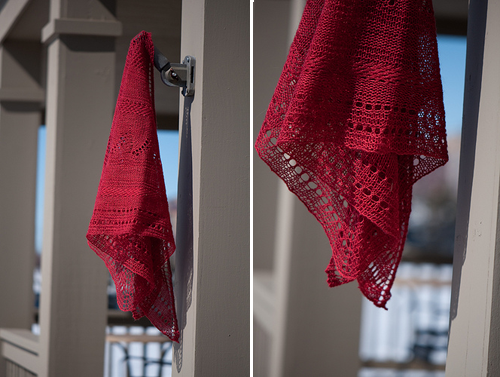 |
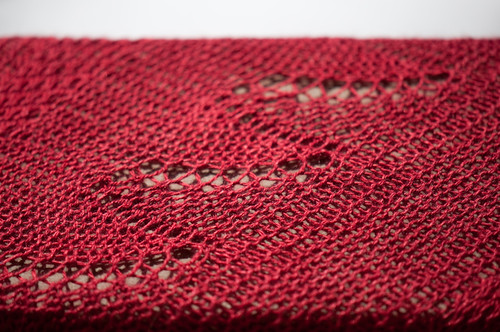
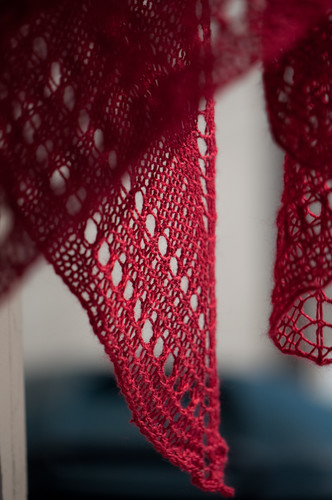
So I am pretty late in getting this to Mia, but with all the nightmare weather and deadlines galore I can finally get to the PO today. So I thought it was safe to post photos of it. It isn't much of a surprise since Mia has known about her Christmas gift even before I left for London. So here are pictures of the finished scarf. And obviously I love the concept of this textured shawl recipe since this is my third version of the shawl. Indigo Hand Spun - Textured Shawl - Habu Textile A-1B Kakishibu Tsumugi Silk |
 |
Showing posts with label Estonian lace. Show all posts
Showing posts with label Estonian lace. Show all posts
Thursday, March 04, 2010
kitty: Mia's Christmas Scarf

Tuesday, January 12, 2010
kitty: fireplace retreats
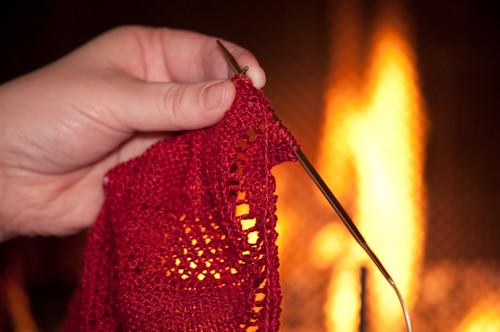 |
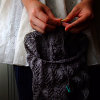
We have broken the record here in Columbus for continuous snowy days, 17 days and counting. I also think that the grumpiness meter is also growing with just about everyone I am talking with on a daily basis. Prime example of people not dealing with cold, gray, snowy days. So I have been trying to take small retreats in front of the fireplace. Lots of cream tea and even some home made cookies to cheer me up. I haven't really been able to knit much since I injured my hand in London. Last night I tried to knit a little on Mia's very late Christmas gift. She already knows about it, but here is a little sneak peak. It will be a well traveled shawl. |
Thursday, January 07, 2010
kitty: Haapsalu Shawl - Haapsalu Sall
 |
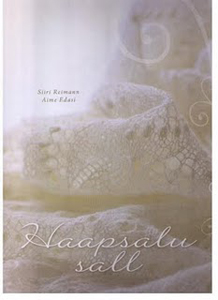 |
Estonian Version Publisher - Saara kirjastus(Saarakiri OÜ) |
|
|
|
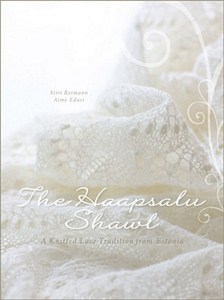
If you are in love with lace knitting, it isn't to late to pre-order a copy of Haapsalu Shawl's from Knit & Purl. There are some rumors that there will only be 300 copies of the book printed in English. This is a translation from the original version which was written in Estonian and is out of print. My Copy came on Monday and I haven't stopped reading it and looking through the photos. I have even used one of the patterns in another textured shawl recipe shawl I am making for a christmas gift that I am really late on. Review: Unlike Nancy Bush book on Knitted Lace of Estonia: techniques, Patterns and Traditions, that was published in 2008, this is not a project book per say. It is a stitch dictionary of traditional designs with some very basic instructions on how the patterns were used in a few historical designs. The book is laid out with a brief history of the town and the knitters. There is a collection of reproduced historical photographs of the knitters of the area past and present. The next section is an outline of the techniques that will be needed to accomplish the art. There are wonderful drawings, photographs and the keys to the charts. It even clearly shows you how to build a lace frame and how to stretch your project. The stitch Library (More than 100 Lace Patterns) is then divided by themes. Variations of Lily of the valley motif, leaves/twigs, money, and large motifs that are shown in shawls. There is a mix of nupps, cables, crossed stitches, and patterned holes. Then there is an extensive section on lace edgings. The charts and images are very clear and easy to follow. ...... |
|
More Info / Pictures: Estońskie Szale - Estonian Lace Haapsula Museum - Läänemaa Muuseumi Gjabouri's Blog - Haapsalu Sall Book Purchase other Books and booklets - hobipunkt (have not ordered before) Włóczkomania - Diagrams of Estonian Lace
- Greta Garbo Shawl |
|
| New Estonian Book in JP | |
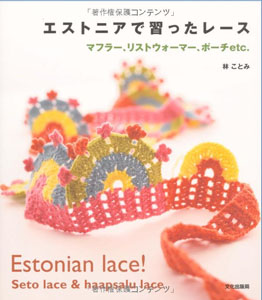 |
Estonian Lace! Seto Lace & Haapsalu Lace エストニアで習ったレース—マフラー、リストウォーマー、ポーチetc. (大型本) by 林 ことみ My Copy just arrived, but I haven't had time to study it or read it.
|
Thursday, June 05, 2008
kitty: start of a new lace project
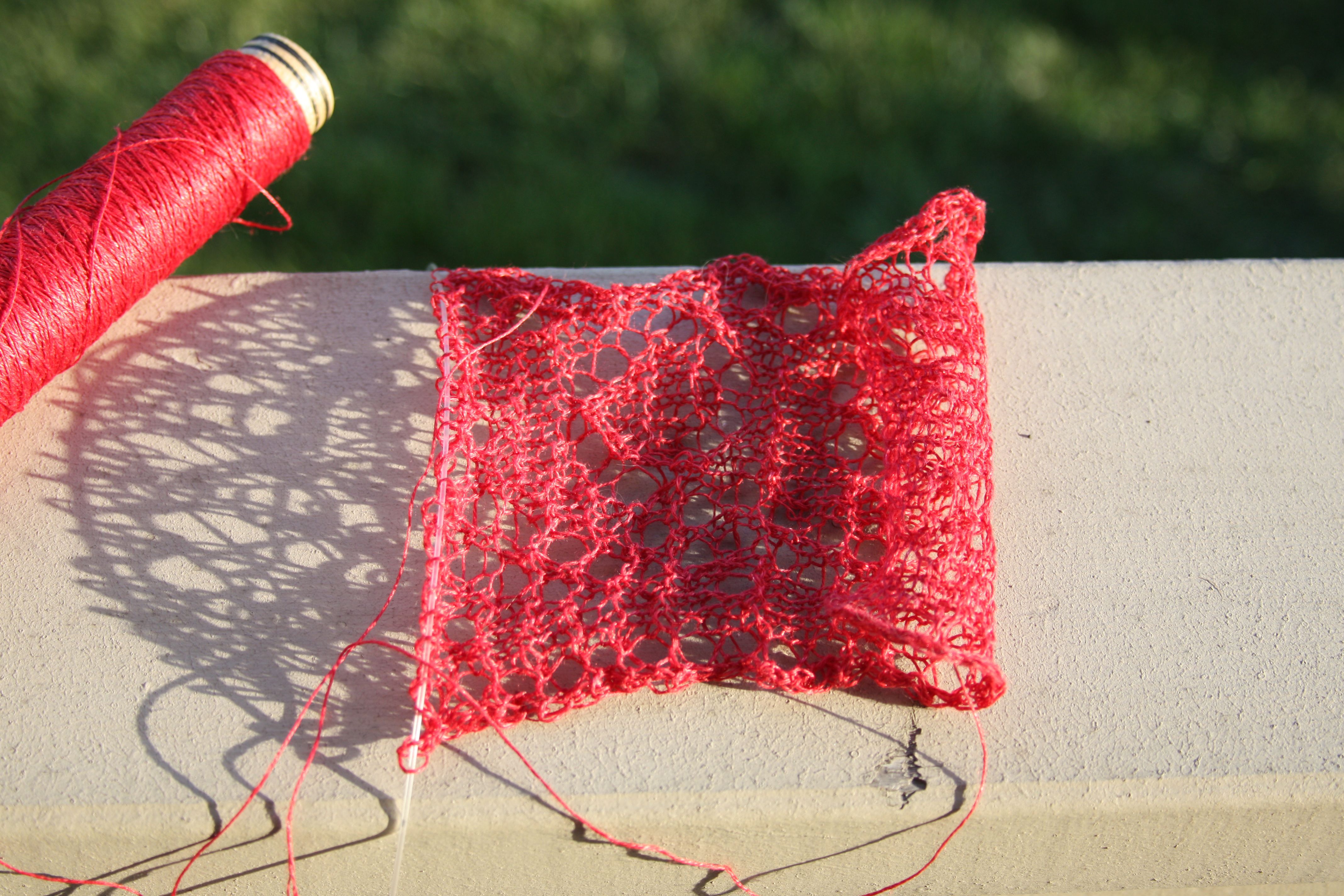 |
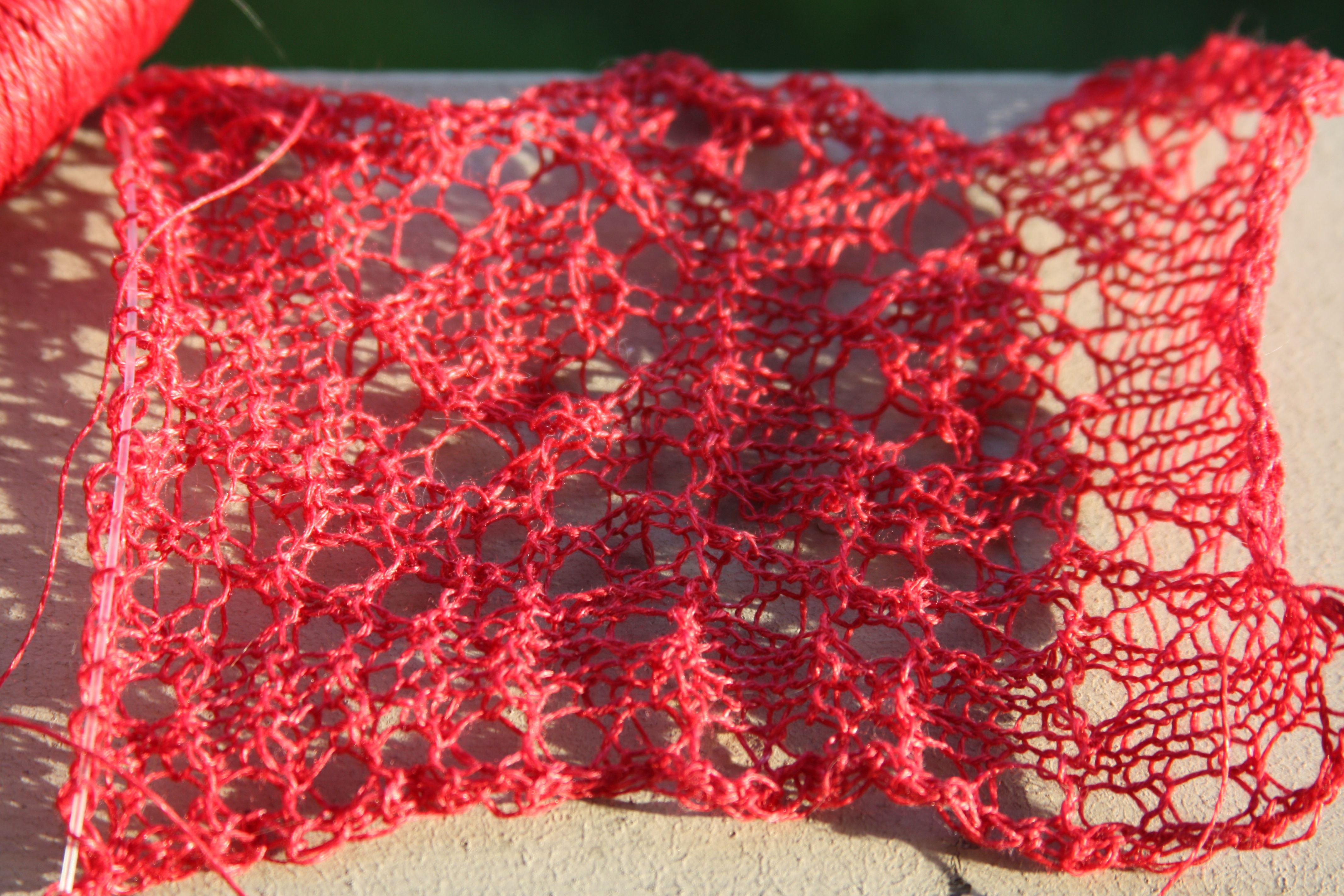
| Vintage Estonian Border knit out of Strawberry colour Linnet Light Linen. |
 |
Wednesday, February 13, 2008
kitty: Estonian Cast-on or German Cast-on
 |
Estonian Lace Cast-On or German Cast-On One of the problems that I seem to always run into when I knit with really bulky yarns is that my cast on edge is to tight. My default cast on has always been Long Tail Cast-on, but I am starting to experiment with other techniques. So I decided to play around with a very old cast on known for having enough stretch for lace shawls for a hat edge. I couldn't be happier with how it turned out. I love how the bars look like they go over the knit stitches at the edge. Blog Reference: Life 'n Knitting - Estonian Cast On |
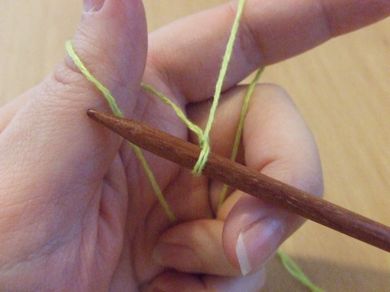 |
| This set up is much like you would use for Long Tail cast on with a slip knot at the beginning and a long tail hanging down. |
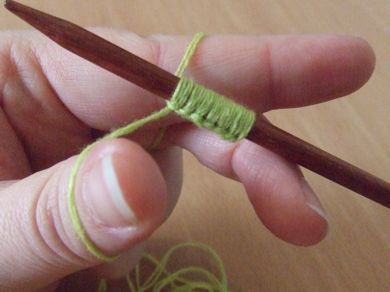 |
| The first stitch is exactly like the Long Tail Cast-on |
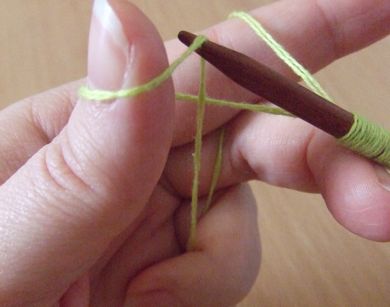 |
| where the yarn is wrapped from the inside of the thumb over and drops down to be held by your ring finger and pinkie for tension. |
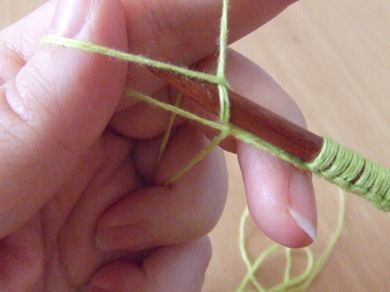 |
| The needle then picks up the outer thread around the thumb and makes a stitch with the tail yarn that is wrapped around the index finger. |
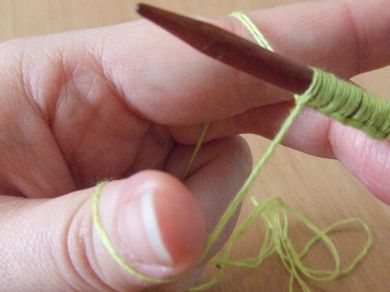 |
| Then both threads are pulled tight to start the next stitch. The Yarn is now reversed around the thumb. It is wrapped from the outer part of the thumb around and is held by the ring finger and pinkie. |
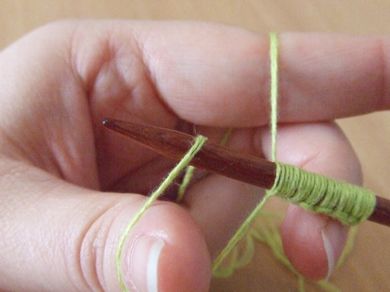 |
| The needle then picks up the inner thread around the thumb and makes a stitch with the tail yarn that is wrapped around the index finger. |
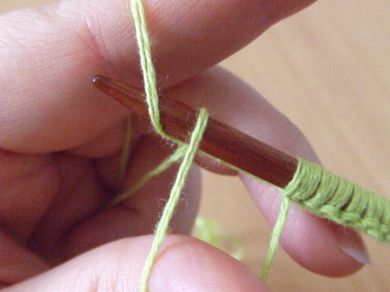 |
| For me this was the step that was the hardest since the loop tends to fall off a lot, but with practice this got a lot easier. |
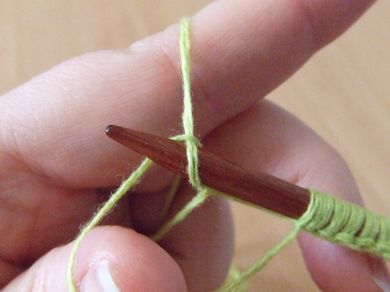 |
| The yarn is then pulled through and tightened up. |
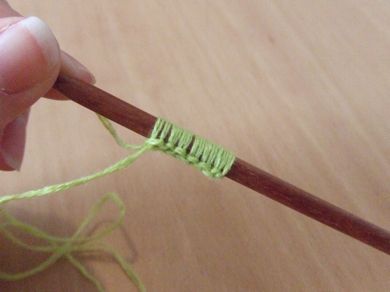 |
| You alternate between these two direction and it forms cute little bars between your stitches that are nicely locked down. |
Sunday, February 10, 2008
kitty:my thoughts on square shawl construction
I keep thinking about what that 80-year-old woman in Leksand said. I couldn't even walk 9.3 miles and certainly not while knitting. On the other hand it really also made me think about all the skills and techniques that have been lost or almost lost through the ages. Whether it is because of German Knitting teachers who taught that there way was the only way to knit or if it was just because of the evolution of the modernization of techniques for one reason or another. Even today, when someone actually tries to do research on shawl construction, it is almost impossible to find written text about the construction and history. On top of that, if the book was ever written, it is probably out of print. So this really got me thinking about things I have read, shawls that I was lucky enough to see in the Ohio Sate University Textile collection, techniques I figured out on my own due to the fear of running out of yarn, and also information that I gained during the most recent workshops that I attended. If you have other references on these construction types, please let me know. I would love to be able to find out more. |
|||||||||||||||||||||
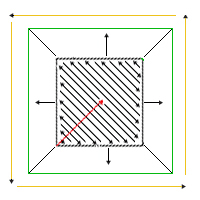
This is probably the shawl design that we are all the most familiar with and understandably it is probably the easiest one to work out the math. You create either a large square or large rectangle. When the center is completed the outer most stitch is then picked up and worked around the edge of the main square as the anchor. The corners are either done using short rows or by bunching up extra stitches to form a corner. The bunched up stitches though have a tendency to create a pucker or a poof. |
|||||||||||||||||||||
Up until the workshop that I took with Galina Alexandrovna Khmeleva I didn't realize that this was the technique for Traditional Orenburg Lace Shawls. When I was working on one of my shawl last winter I basically figured out this structure, but I was knitting the brown body section with three needles. (2 needles were used for the borders and then a longer needle for the actual body) I wanted to knit the borders as I went because I had a huge fear of running out of the two skeins of yarn that I had. This technique evolved with the next bordered shawl that I made and I ended up just knitting the borders across. The right side (front side) is always one row ahead of the backside. You can tell that you are on the front side of your work because the tail from the cast on is on the left hand side. |
|||||||||||||||||||||
|
|||||||||||||||||||||
Galina Alexandrovna Khmeleva 2008. Orenburg Lace Shawl Workshop |
|||||||||||||||||||||
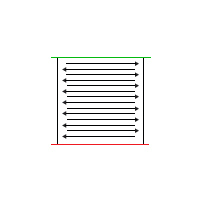
The traditional Shetland Shawl is worked in 4 pieces. The main body is started by the outside edge where you work short row edges to form half of the corners. The outside border is normally made up of two borders before the body is started. The body is worked from one edge to another to form either a square or rectangle. The other three sides are knit separately and then grafted together. |
|||||||||||||||||||||
This shawl is knit in two pieces. The center is knit as a diamond in garter stitch. The big difference is the outer length of each of the outer borders are cast on and worked to the center. Then the center edges are grafted together traditionally using the Herringbone Stitch or Mattress stitch. Miller, Sharon 2006. "Heirloom Knitting's Shetland Hap Shawls" |
|||||||||||||||||||||
This shawl is knit in one piece if knitted in the round. The center is knit as a diamond in garter stitch. Then the outer stitches on all sides are picked up and knit outwards. (Note: If you do not work this shawl in the round you would do the method described above under Traditional Shetland Shawl.) Miller, Sharon 2006. "Heirloom Knitting's Shetland Hap Shawls" |
|||||||||||||||||||||
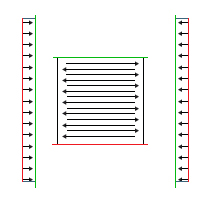
For a lot of the earlier shawls they didn't have a border around the edge. The shawl was knit with one lace pattern in the middle and a garter stitch around all the sides. The garter stitch was often pulled out to form points with out a complicated border. Nancy Bush 2008. Knitting Estonian Lace Workshop |
|||||||||||||||||||||
I cannot find any information on actual construction. From the workshop I attended these shawls where knit in three pieces and the bind off edge of the border were grafted to the center. We will have to wait until the first Estonian Lace book is published in the states hopefully this fall to find out the secrete. Nancy Bush 2008. Knitting Estonian Lace Workshop |
|||||||||||||||||||||
It seems like with most modern adaptations complicated math and grafting has been replaced with picking up the outer stitch and working the border outwards to the bind off edge. Here the center square is made up of one knitted lace pattern framed with garter stitches. Then stitches are picked up along all four sides and knitted outwards to create a decorative border. Nancy Bush 2008. Knitting Estonian Lace Workshop
|
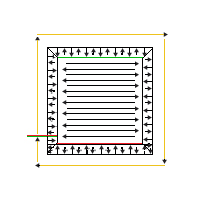 Modern Shawl
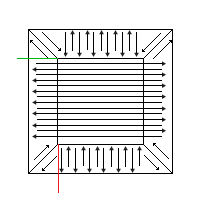 Orenburg Lace Shawl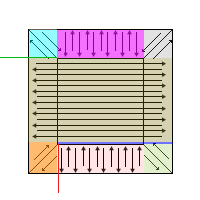


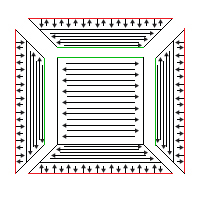 Traditional Shetland Shawl
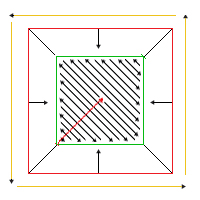 "Border Inwards" Traditional Hap Shawl
 "Border Inwards" Modern Hap Shawl
 Traditional Estonian Knitted Shawls
 ????? Early Haapsalu, Estonian Knitted Shawl????
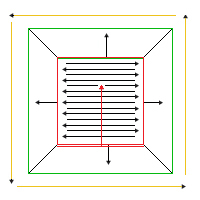 Modern Estonian Shawls
Monday, February 04, 2008
kitty: don't pinch me...
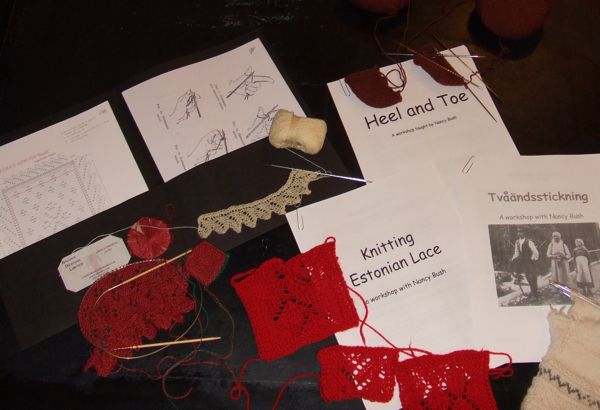 |
... Please don't pinch me, I don't want to wake up. I really want these dreams to continue. This past week was a dream come true in so many ways. I feel like a different world of techniques and skills has just been opened to me. If I had my way I would be catching a flight to Fallen, Sweden to study Tvåändsstickning/Twined Knitting in a heart beat or maybe Haapsalu, Estonia to study Estonian Lace or Orenburg to study traditional Lace patterns. I too want to drive a car across the Baltic Ocean in my quest of knitted wonders of the world. A girl can dream can't she, but at least I had the next best thing. |
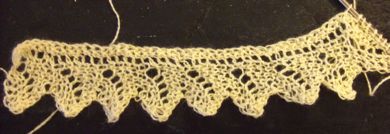 |
(Orenburg Lace Border with the first short row corner) |
If you are wondering what the next book Nancy Bush is working on.... Estonian Lace due out hopefully this fall. |
 |
(Click for larger image) |
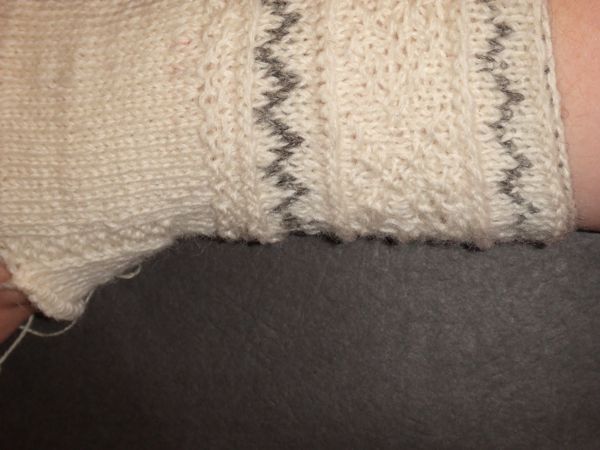
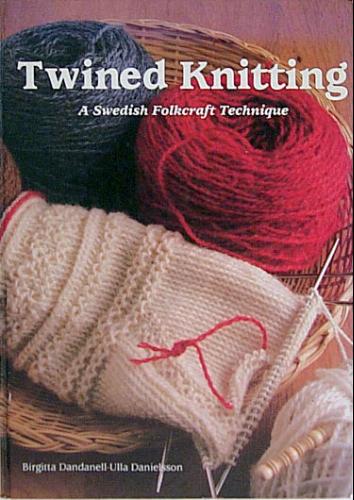
Anne-maj Ling's work Two Books in English - Twined Knitting by Brigatta Dandanell & Two-end Knitting by Anne-maj Ling |
 |
| Check the lovely little braided Tvåändsstickning cast on. It is done with three threads and forms a little line against the twined edge. |
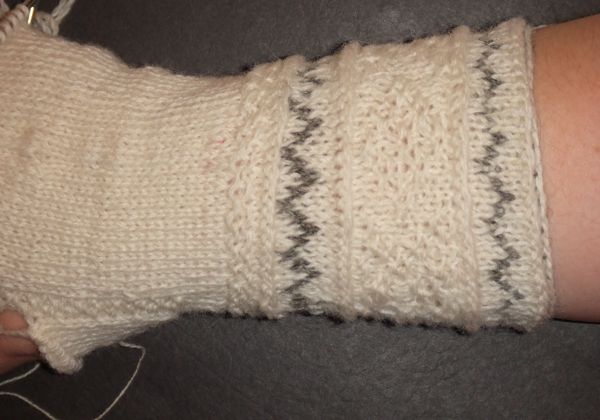 |
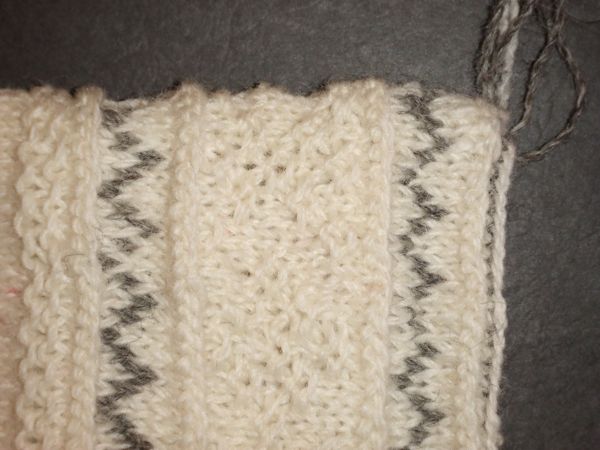
| My very first colourwork in all its glory. As you can tell the second pattern rows look a lot better. |
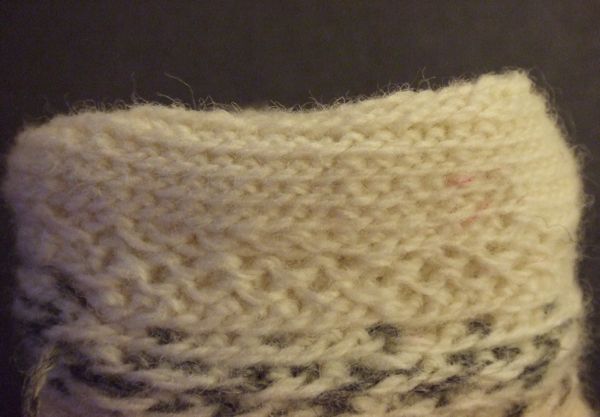 |
| I folded the glove inside out so you can see how beautiful the inside of the glove is as well. In Sweden they have found gloves inside out in tombs. |
 Last weekend I had the great fortune to take a class with
  Then the I wonders continued on Wednesday and Thursday when I got to take 3 classes with
  A few fun links:
Subscribe to:
Posts (Atom)